No one enjoys paying property taxes, especially when affordability is a concern for many. I’ve been asked a lot recently about where property tax dollars go, why taxes have increased, and how Kingsville compares with other municipalities.
To help answer those questions, I’ve adapted a helpful explanation originally shared by Mayor Bailey of Lakeshore, using Kingsville’s information, to explain the components that make up your tax bill. I also address Kingsville’s tax increases and provide the most recent regional tax comparison chart.
Kingsville is a two-tier municipality and your property tax bill is made up of three separate components:
 Town of Kingsville – funds local services such as roads, parks, fire protection, recreation, planning, by-law enforcement and other municipal services.
 County of Essex – funds regional services including EMS, long-term care, libraries, regional roads, social services, organics and other county-wide responsibilities.
 Province of Ontario (Education) – the education portion of your property taxes is collected by the municipality on behalf of the Province and directed to local school boards.
It’s important to understand that not every increase on your tax bill is a Kingsville decision.
The pending Green Bin charge is a County of Essex levy that funds provincially mandated organics diversion, delivered through the Essex-Windsor Solid Waste Authority (EWSWA). Although it appears on your tax bill, it is set by the County, not the Town. I’ve previously shared more about the Green Bin decision and Kingsville Council’s vote to oppose it. Municipalities are responsible for delivering some services that they have little control over, such as policing. While Kingsville funds OPP policing, contract costs are set by the Province. Approximately 2% of last year’s tax increase was directly attributable to higher OPP costs.
Council adopted a strategic plan that prioritizes long-term fiscal sustainability. For many years, Kingsville, like many Ontario municipalities, kept tax increases low while investments in infrastructure and reserves did not keep pace with long-term needs. That created an asset management funding gap.
Today, Council is rebuilding reserves and investing in the replacement of roads, facilities and other municipal infrastructure. By making steady, planned investments now, we can maintain infrastructure, avoid larger costs in the future, and keep taxes fair without compromising the services our community depends on.
There are no easy choices when balancing affordability with the need to maintain the services and infrastructure residents rely on every day. My commitment is to make thoughtful decisions that protect both taxpayers and the long-term financial health of our community.
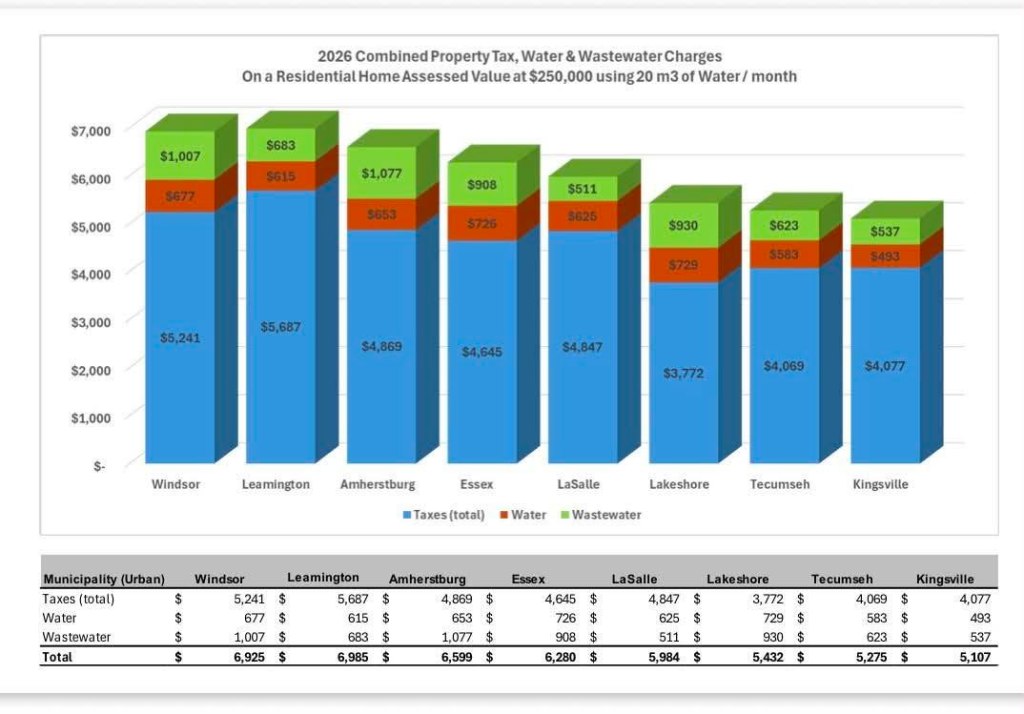
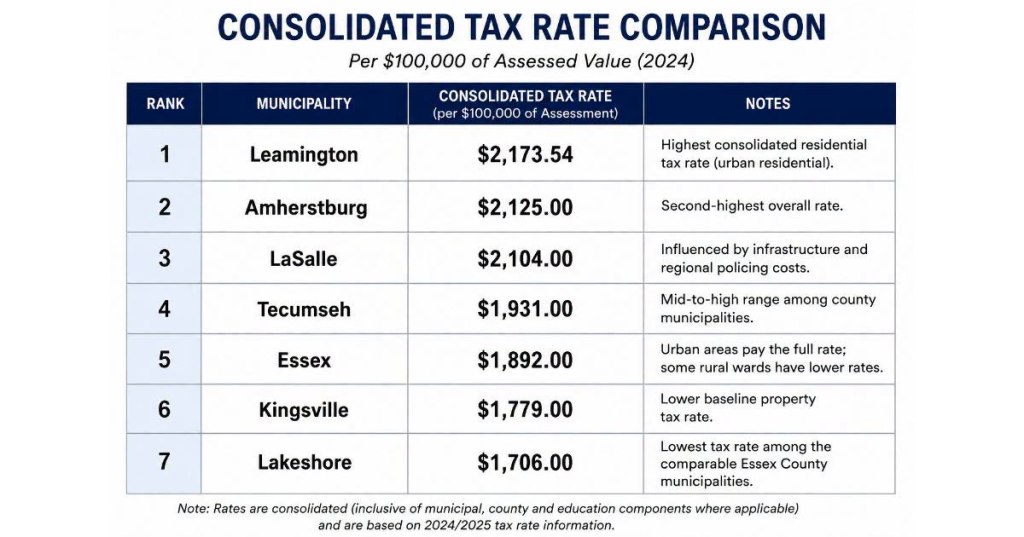
Consolidated regional tax rate comparison, 2024

