
In a special meeting on August 16, 2021, Council unanimously voted to commission a study of temporary foreign worker housing. In March 2021 Council had identified “Migrant Worker Housing – Inspections (Building/Fire), regulate, reduce, or increase” as a top priority. For me, this is a priority because the quantity of temporary workers coming into our community is rising at the same time that we have a housing shortage. Using residential dwellings to house temporary workers adds to the impact of low supply and affordability. During the height of the covid-outbreak we learned about the health concerns of congregate living and temporary worker housing standards. I’ve also heard concerns from the community about property values and standards as well as issues of safety. As the vice-chair of the Greenhouse Policy Review Committee it was apparent to me that we do not have the appropriate policy in place to direct and manage this growth. The committee determined that employers shall provide sufficient on-site housing and that use of single dwellings is discouraged and require legal conversion subject to building, fire and health codes. There was also expressed the need for safe transportation and a desire to have greenhouses in a specific area and be connected with active transportation corridors.
The resolution wording for the study:
WHEREAS Section 38(1) of the Planning Act, R.S.O. 1990, c.P.13, as amended, authorizes the council of a municipality to pass an interim control by-law where the council has directed that a review or study be undertaken in respect of land use planning policies in the municipality, or in any defined area or areas thereof;
AND WHEREAS Council hereby seeks to commission a study for the purpose of informed decision-making with respect to the recently proposed housing of agricultural workers on lands and in buildings and structures not situated on the very lands where those agricultural workers are employed;
AND WHEREAS the Town of Kingsville’s Official Plan and Comprehensive Zoning By-law currently do not provide guidance and/or policy with respect to the suitability of the housing of agricultural workers on lands and in buildings and structures not situated on the lands where those agricultural workers are employed.
AND WHEREAS the Council of the Town of Kingsville deems both desirable and expedient to commission a study as a preclude to the enactment of an interim control by-law that would provide the Town with the requisite time and resources to study the potential benefits and pitfalls of allowing off-site agricultural housing in the community.
BE IT RESOLVED that the Council of the Town of Kingsville hereby commissions and directs Town Administration to prepare and/or obtain a study of the issue of offsite agricultural housing in the Town of Kingsville, and that this resolution is passed providing Town Administration with the necessary authority to see that such a study is prepared for the benefit of the Town.
In the same meeting, Council passed an interim control bylaw, the resolution wording as follows:
WHEREAS Section 38(1) of the Planning Act, R.S.O. 1990, c.P.13, as amended, authorizes the council of a municipality to pass an interim control by-law where the council has directed that a review or study be undertaken in respect of land use planning policies in the municipality, or in any defined area or areas thereof;
AND WHEREAS Council has directed, by resolution, that a background study be undertaken to review the land use planning policies related to agricultural worker housing in respect of the lands within the Town of Kingsville;
AND WHEREAS it is deemed desirable and expedient to enact this interim control by-law to provide the Town with the necessary time to complete the study and allow Council to consider the results of such study.
NOW THEREFORE THE COUNCIL OF THE CORPORATION OF THE TOWN OF KINGSVILLE ENACTS AS FOLLOWS:
- The provisions of this by-law shall apply to all lands within the Town of Kingsville.
- Notwithstanding any other by-law to the contrary, no person shall, on lands located within the Town of Kingsville, use any land, building or structure for agricultural worker housing that is situated off the agricultural lands where those workers are employed. The provisions of this by-law shall not apply to off-site worker housing that lawfully existed on the date of the passage of this by-law as long as it continues to be used for such purpose.
- Where any conflict exists between the provisions of this by-law and any other by-law of The Corporation of the Town of Kingsville this by-law shall prevail.
- If any provision or requirement of this by-law, or the application thereof to any person, shall to any extent be held to be invalid or unenforceable, the remainder of this by-law or the application of such provision or requirement to all persons other than those to which it is held to be invalid or unenforceable, shall not be affected thereby, and each provision and requirement of this by- law shall be separately valid and enforceable to the fullest extent permitted by law.
- This by-law shall come into force and take effect on the day it is finally passed and shall remain in effect for one (1) year from the passage of this By-law unless otherwise extended in accordance with Section 38 of the Planning Act, or repealed by Council at an earlier date.–A recorded vote was requested.
A recorded vote was requested:
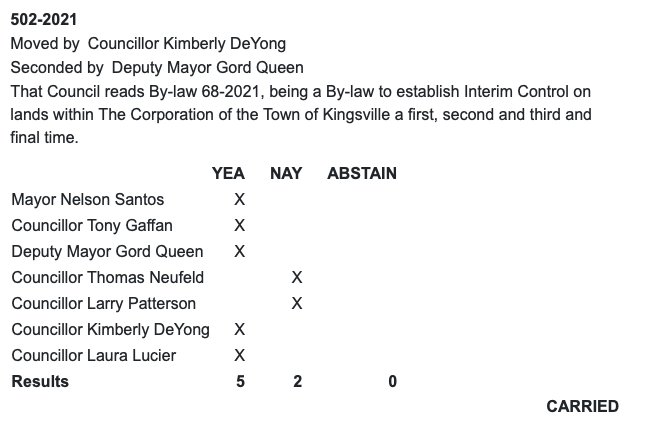
The interim control bylaw pauses applications requesting to rezone residential dwellings to farm worker housing (farm workers include those at greenhouses, wineries, mushroom farm, fruit tree farms…). Off-farm housing requires specific zoning. The interim control bylaw does not prevent farm workers from living in residential dwellings anywhere in town. Rather, it is a restriction to the use as a “bunk house” off the farm. Bunk houses will continue to be built on-farm and workers of all kinds are permitted to rent or own a residence anywhere in town.
Fast forward to the Council meeting of April 11, 2022. Council supported the follow recommendation to allow a temporary status quo of off-farm housing.
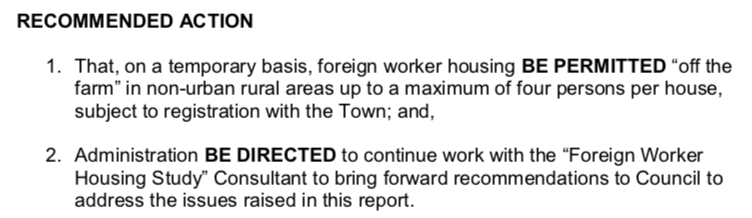
The report, by CAO John Norton, details past practices whereby administration allowed four workers in an off-farm dwelling. Such a use did not require a zoning by-law amendment or any approvals or upgrades for building or fire codes. If an employer wants to house more than four workers, a zoning by-law amendment and safety upgrades are required. The report highlights the change in interpretation whereby administration had previously misunderstood and our zoning by-law prohibits ALL off-farm housing unless a zoning by-law amendment is approved OR where the Ontario Land Tribunal has ruled to allow it (this can happen because our Official Plan does not match our zoning by-law, more on that coming). This change of interpretation was not a result of the interim control by-law, but rather the interim control by-law prohibits applications for zoning by-law amendments for one year while the issue is under study. The report continues with the immediate impacts of this change in interpretation. Employers that had purchased houses for four or less workers are now rightfully required to obtain a zoning by-law amendment for this use. However, these amendments cannot be applied for during the interim control by-law period. This leaves employers scrambling and can impact worker safety. The full report is worth your time to read, if this issue interests you.
How many homes are we talking about? Administration estimates 25-35 off-farm houses being used for up to four workers. Six off-farm houses have received zoning by-law amendments either by Council or the Ontario Land Tribunal. The remainder are not in compliance with the zoning by-law and exist primarily in our rural area.
Several employers have indicated that on-farm housing is ideal but there are barriers. A major issue is a lack of sewer systems. When a septic system exceeds a certain capacity it requires slow to receive approval from the Ministry of the Environment. I brought up the potential solution of the modular units made right in our region. I toured the facility last November.
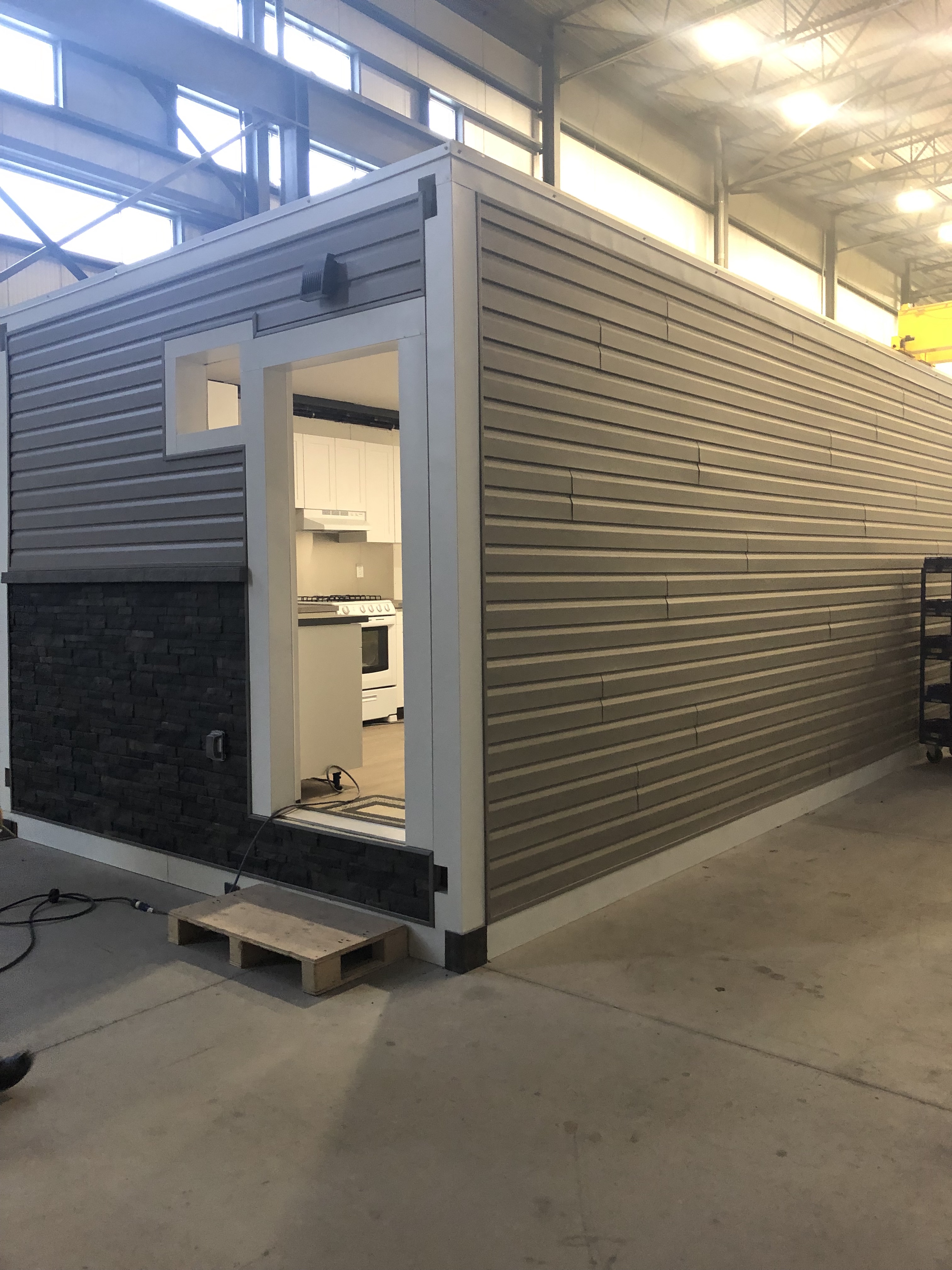
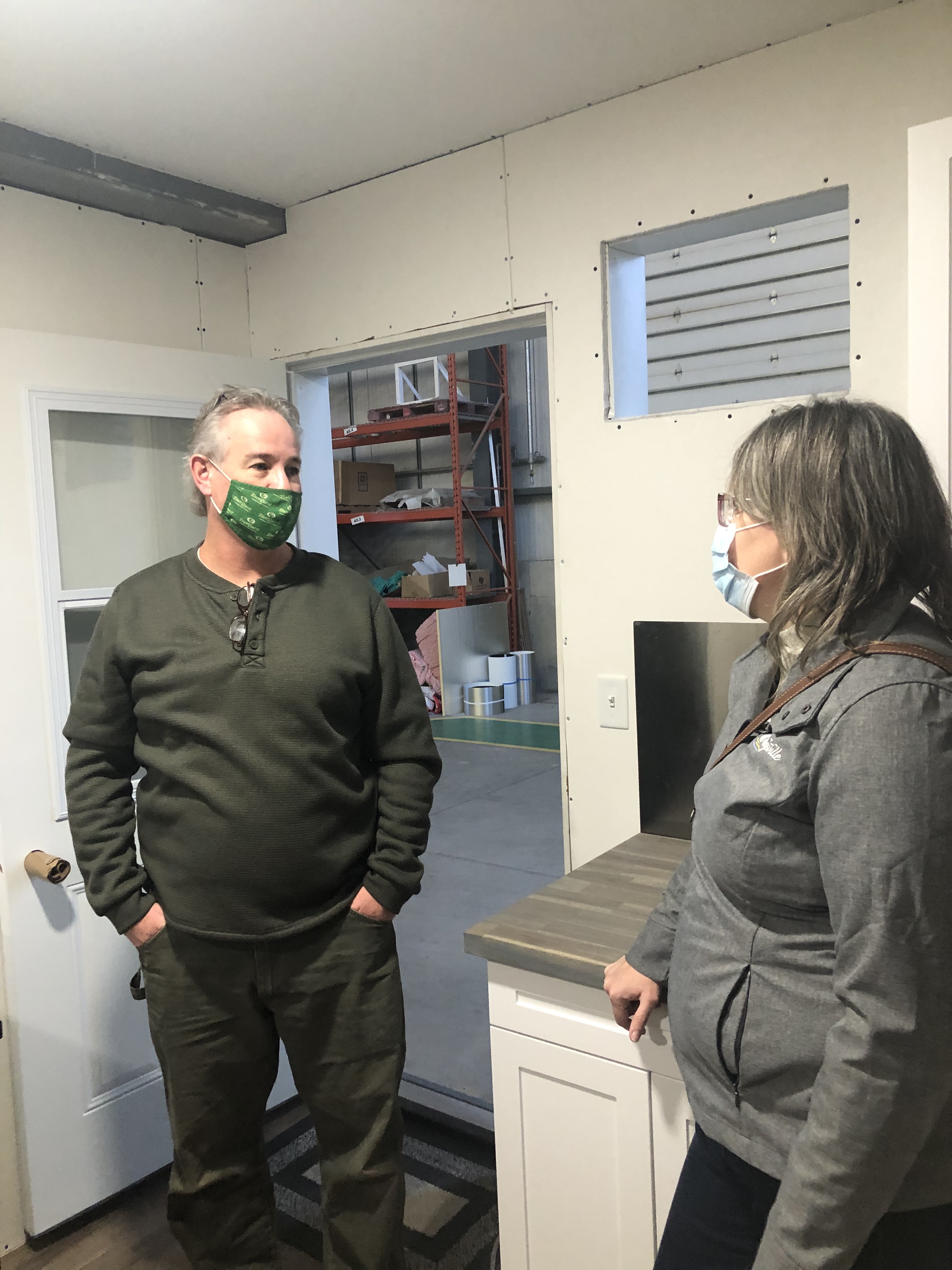
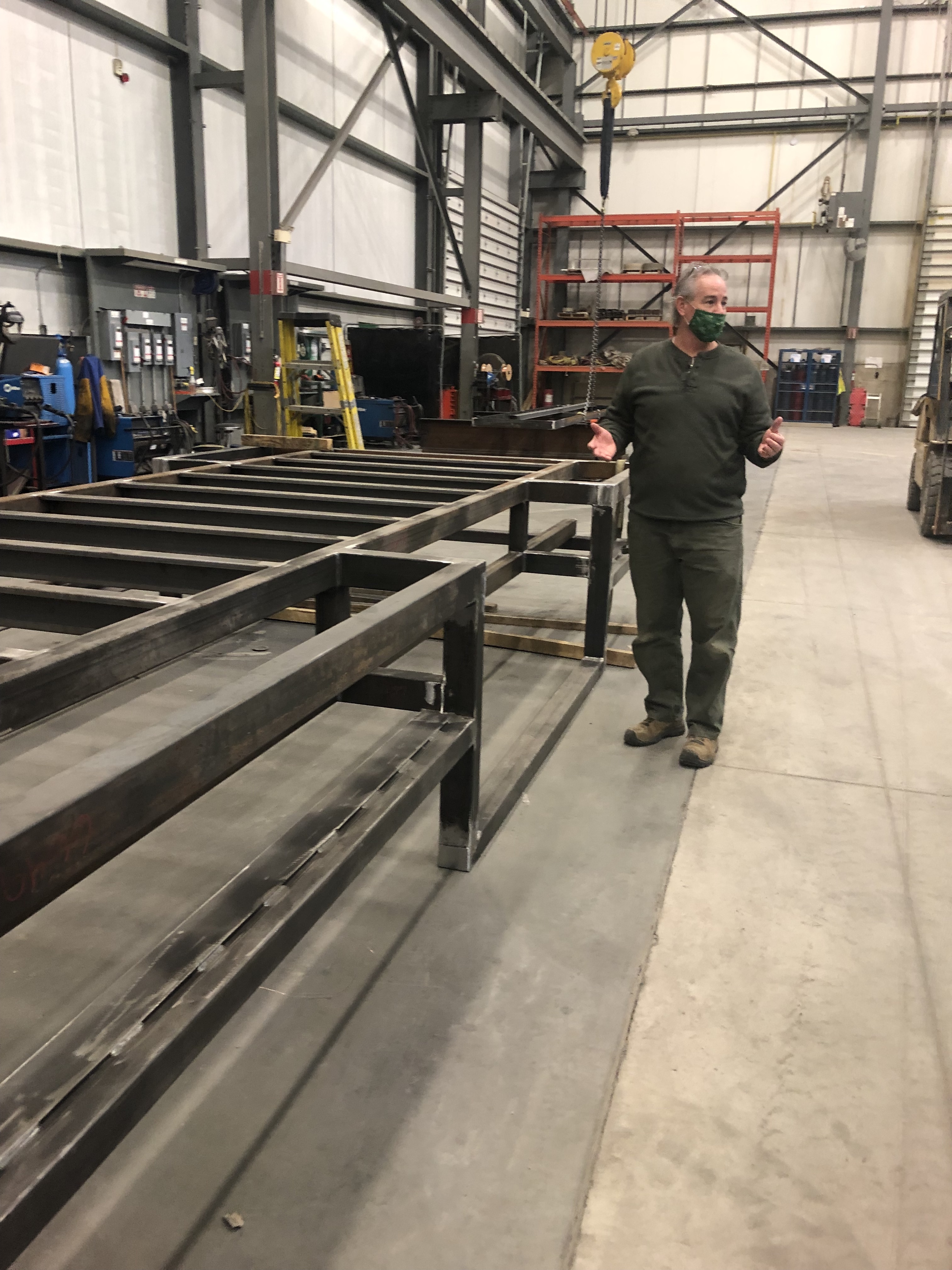
These units offer on-site septic storage that can be regularly emptied. But another barrier, building code only permits short term septic storage. I inquired as to what the definition of short term was and the response was less than a year – many foreign workers come for an eight month work term and so it still isn’t clear to me why this isn’t a viable solution – especially for short term temporary use, and so I’ll continue to raise this possibility and push for more favourable interpretations.
The action of Council at Monday’s meeting does not revoke the interim control by-law. Applications to rezone residential dwellings to worker housing are still on pause and the study continues. At the next Committee of the Whole meeting on Tuesday, April 19, 2022 the study consultants will conduct a Council Workshop on the issue.
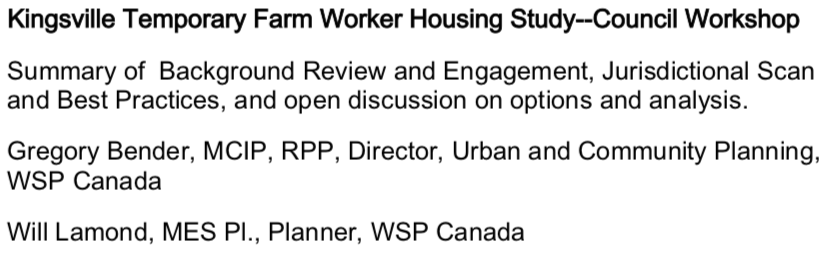
It will be a good meeting to tune into. Also, watch for public input opportunities that you can be sure I’ll share.

